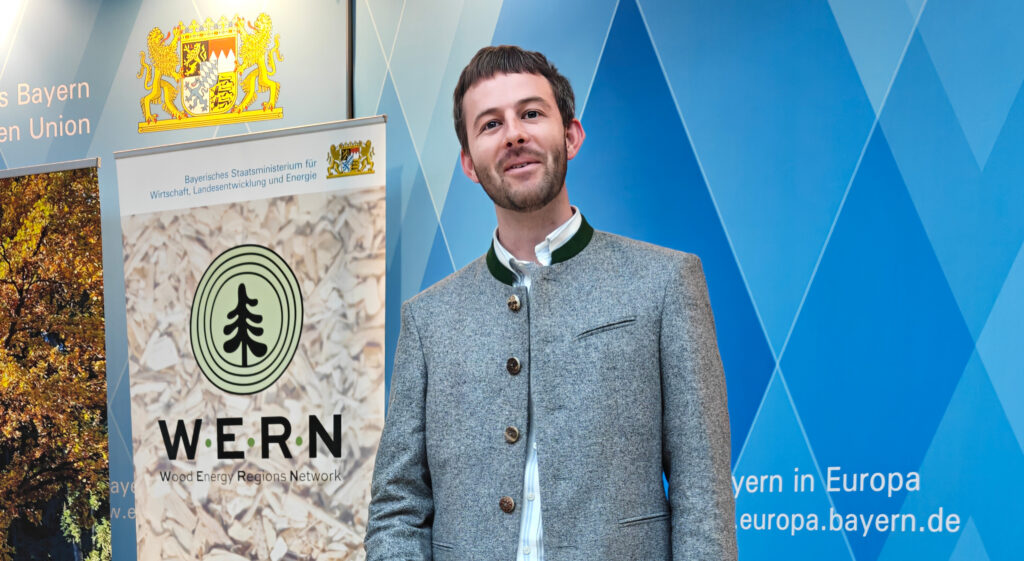
As Europe navigates the twin challenges of energy security and climate neutrality, the role of Ecodesign policy is gaining renewed importance. In this interview, the European Commission shares its perspective on how future regulations can balance environmental performance, technological innovation, and affordability—while ensuring that biomass and local space heaters remain a viable part of the EU’s diverse energy landscape.
Looking ahead, how does the European Commission view the role of Ecodesign policy in shaping a modern, efficient, and future-proof framework for local space heaters across the European Union?
Biomass is today, and will continue to be in the future, a relevant energy source for many households across the EU. This is again underlined in the current situation of geopolitical instability, where biomass can help reduce EU dependency on energy imports. In this context, biomass-fuelled appliances like log wood and pellet local space heaters can play a role in the configuration of the energy system, although this potential should be compatible with legitimate air quality objectives such as the reduction of particle matter (PM), which is particularly prevalent in urban areas.
Ecodesign legislation must take into account both aspects and ensure that reasonable environmental requirements are put in place, without undermining affordability and secure access to local space heaters. This is the objective of the ongoing review of the current EU requirements. This is being intensively discussed with industry and other stakeholders to reach a balanced compromise. At the same time, future legislation has to remain technologically relevant for some years, reducing the need for frequent burdensome regulatory reviews that would create legal uncertainty among stakeholders, increase red tape and costs to adapt accordingly.
From your perspective, what are the key objectives that will guide the Commission’s work on energy efficiency for buildings and products in the coming years, particularly with regard to environmental performance, innovation, and regulatory coherence?
The main EU legislation to reduce the negative environmental impact of the European building stock is the Energy Performance of Buildings Directive (EPBD). Amongst others, it requires new heating systems to be installed with higher environmental performance. In the EPBD context, updated ecodesign measures for heating systems, including for heat pumps, gas boilers and local space heaters, help architects and builders meet the requirements of the EPBD. They do so by providing the market with advanced products to reduce the negative environmental impact of heating and other buildings systems, such as for cooling or warm water. In the same sense, ecodesign is very useful for Member States to reach their national targets under general energy and environmental legislation, such as the Ambient Air Quality Directive or the Energy Efficiency Directive. Current and future action on ecodesign should closely align with the environmental objectives of those more general policies.
Local space heaters remain an important element of the European heating landscape. How does the Commission see Ecodesign contributing to a balanced and technology-open approach that reflects the diversity of heating solutions and regional contexts within the EU?
The role of ecodesign is to put in place feasible and cost-effective requirements that improve the average of the market without undermining the affordability of solid fuel local space heaters as a heating option. Affordability is one of the main aspects addressed in the current review. The premise is to ensure that households that rely on biomass as an accessible and secure way of heating can continue to do so, regardless of their income or the place where they live. In addition, consumers must also be confident that, by using ecodesign-compliant products, the negative environmental impact of heating is minimised. This will contribute to safeguarding the role of local space heaters in our heating system, while addressing social concerns about the environmental effects of burning biomass.
Innovation plays a central role in achieving Europe’s energy and climate goals. How does the Commission intend to ensure that the Ecodesign framework continues to support technological progress and encourages manufacturers to invest in advanced, low-emission solutions?
There is still room for technological improvement of solid fuel local space heaters. In fact, there are highly sophisticated models already on the market. It is, however, not the role of ecodesign to require only very advanced products, because this could increase prices in the short term and keep out of the market companies that are unable to catch up with high-end technology.
The goal of ecodesign is rather to support innovation without favouring one specific solution over another. Lower emissions are still possible through more efficient combustion by, for instance, using improved materials, reducing air leakages or optimising the number, layout and shape of air inlets. The energy label, as a complement to the ecodesign minimum requirements, could further support technological progress by including information on emissions. It is important that consumers are provided with reliable information about different levels of environmental performance of appliances so that they can differentiate between basic ecodesign-compliant products and more advanced ones. This can also encourage manufacturers to implement best available technologies like catalysts (broadly used in the US), electrostatic precipitators or automatic airflow controls. To emphasise, this not as a mandatory requirement, but on a voluntary basis.
Stakeholder dialogue is a cornerstone of EU policymaking. How does DG Energy approach cooperation with manufacturers, craftspeople, national authorities, and other stakeholders to ensure that Ecodesign requirements are well understood and practically implementable?
Communication and continuous dialogue with stakeholders and Member States’ authorities is an essential part of the ecodesign and energy labelling decision-making process. This is ensured through an open process, where all stakeholders are consulted at numerous stages, including on the draft requirements.
It is the Member States themselves who have the final say over the proposed text through a vote. No formal proposal will be tabled by the Commission without actively and intensively discussing with the main representatives of the sector. It is very important that stakeholders and authorities are aware of this transparent and inclusive process and EU-level organisations that are closely involved in the process have an essential role to play in ensuring stakeholders and national authorities are made aware of this process in an effective and timely way.
Understanding the process is therefore a first step in achieving a constructive dialogue. At the same time, it is to the advantage of everyone involved to be mindful of the issues and mutual interests at stake. This includes technological feasibility but also the need to improve air quality, which has a direct influence on premature deaths in the EU related to cancer or cardiopathic diseases. As well as the human cost, there is also a societal cost, although less visible than the price of a product. Environmental and industrial considerations don’t need to be in contradiction with one another but rather complement one another. The end result is updated ecodesign requirements that satisfy all stakeholders in this sector, whether producers, consumers, or simply engaged citizens.
As energy systems and buildings become increasingly interconnected, how does the Commission see Ecodesign contributing to a more holistic perspective on buildings, energy efficiency, and the overall performance of the energy system?
Ecodesign has an important role to play in decarbonising the building stock and the wider energy system. Buildings account for 40% of the total energy consumed in the EU and 36% of total emissions. Installing cleaner, and more energy-efficient, heating and cooling systems is therefore essential to achieve our decarbonisation targets. This should be accompanied by complementary national policies like incentives for buying certain equipment or renovating buildings with, for instance, better insulation. This also reduces fuel consumption and, subsequently, reduces harmful pollutant and greenhouse gas emissions.
Looking to the future, what opportunities do you see for Ecodesign policy to further strengthen planning certainty and long-term orientation for industry and market actors in the field of local space heating?
EU Ecodesign legislation always provides a sufficiently long transitional period, giving industry the necessary time to adapt to the new requirements. In addition, new possible ecodesign rules are always discussed intensively with stakeholders, offering the industry a good insight into those rules long before they start to apply. If information is transmitted from EU-level industry organisations to the national level in an efficient and timely way, everyone in the supply chain, whether manufacturers or dealers, can plan and implement the necessary measures and adapt to updated ecodesign legislation long before it is adopted. To instil more certainty in the planning process, it is also important to reduce elements that are deemed redundant or overlapping with existing legislation.
In this respect, the Commission is also looking to administrative simplification by aligning ecodesign rules and the Construction Products Regulation (CPR) on certification, for instance by recognising a single test procedure for both legal frameworks or the supply of the same information on product performance.
Finally, what message would you like to share with stakeholders regarding the Commission’s commitment to neutrality, objectivity, and constructive cooperation as Ecodesign policy for local space heaters continues to evolve?
The message would be one of reassurance to all stakeholders, and especially to manufacturers of biomass-fuelled appliances, that biomass is, and will continue to be, an alternative energy source in the long term, as the Commission’s energy demand projections show. In this respect, we are committed to finding a pragmatic approach based on feasible measures that align with industry’s interest and support biomass as a competitive alternative vis-à-vis other energy sources, while addressing environmental aspects that are also very important from a societal perspective. Through constructive cooperation and mutual understanding, it will be possible to adopt realistic, and effective, rules that increase the confidence of society in using this technology.

Robert Nuij heads the unit for energy efficiency in buildings and products at the European Commission’s Directorate-General for Energy. He leads the implementation of the Energy Performance of Buildings Directive and oversees ecodesign, energy labelling, and tyre labelling policies.
Previously, he was deputy head of unit for the Energy Efficiency Directive and financing of energy efficiency. He began his Commission career in DG Environment, working on integrated product policy and the EU Eco-label, and later moved to DG Health and Consumers, focusing on product safety and market surveillance coordination.
Before joining the Commission, Robert was a senior consultant in environmental product policy, eco-design, and waste management. A Dutch national, he holds an MSc in Industrial Design Engineering from Delft University of Technology.
Klima- und Energiesicherheitsziele in Einklang bringen: Die Ökodesign-Strategie der EU
Hinweis: Dies ist eine maschinelle Übersetzung, es wurde kein Post-Editing durchgeführt.
Wie sieht die Europäische Kommission die Rolle der Ökodesign-Politik bei der Gestaltung
eines modernen, effizienten und zukunftssicheren Rahmens für lokale Heizgeräte in der
gesamten Europäischen Union?
Biomasse ist heute und wird auch in Zukunft eine wichtige Energiequelle für viele Haushalte in
der gesamten EU sein. Dies wird angesichts der aktuellen geopolitischen Instabilität noch einmal
unterstrichen, da Biomasse dazu beitragen kann, die Abhängigkeit der EU von Energieimporten
zu verringern. In diesem Zusammenhang können mit Biomasse befeuerte Geräte wie lokale
Heizgeräte für Scheitholz und Pellets eine Rolle bei der Gestaltung des Energiesystems spielen,
wobei dieses Potenzial jedoch mit legitimen Luftqualitätszielen wie der Verringerung von
Feinstaub (PM) vereinbar sein sollte, der insbesondere in städtischen Gebieten weit verbreitet
ist.
Die Ökodesign-Rechtsvorschriften müssen beide Aspekte berücksichtigen und sicherstellen,
dass angemessene Umweltanforderungen festgelegt werden, ohne die Erschwinglichkeit und
den sicheren Zugang zu lokalen Heizgeräten zu beeinträchtigen. Dies ist das Ziel der laufenden
Überprüfung der aktuellen EU-Anforderungen. Dies wird intensiv mit der Industrie und anderen
Interessengruppen diskutiert, um einen ausgewogenen Kompromiss zu erreichen. Gleichzeitig
muss die künftige Gesetzgebung über einige Jahre hinweg technologisch relevant bleiben, um
die Notwendigkeit häufiger, aufwändiger Überprüfungen der Vorschriften zu verringern, die
Rechtsunsicherheit bei den Interessengruppen schaffen, den Verwaltungsaufwand erhöhen und
die Kosten für entsprechende Anpassungen in die Höhe treiben würden.
Was sind aus Ihrer Sicht die wichtigsten Ziele, die die Arbeit der Kommission im Bereich der
Energieeffizienz von Gebäuden und Produkten in den kommenden Jahren leiten werden,
insbesondere im Hinblick auf Umweltleistung, Innovation und regulatorische Kohärenz?
Die wichtigste EU-Rechtsvorschrift zur Verringerung der negativen Umweltauswirkungen des
europäischen Gebäudebestands ist die Richtlinie über die Gesamtenergieeffizienz von
Gebäuden (EPBD). Sie schreibt unter anderem vor, dass neue Heizungsanlagen mit höherer
Umweltleistung installiert werden müssen. Im Rahmen der EPBD helfen aktualisierte Ökodesign-
Maßnahmen für Heizungsanlagen, darunter für Wärmepumpen, Gaskessel und lokale
Heizgeräte, Architekten und Bauherren dabei, die Anforderungen der EPBD zu erfüllen. Dies
geschieht, indem dem Markt fortschrittliche Produkte zur Verfügung gestellt werden, die die
negativen Umweltauswirkungen von Heizungs- und anderen Gebäudesystemen, wie
beispielsweise für Kühlung oder Warmwasser, verringern. In diesem Sinne ist Ökodesign für die
Mitgliedstaaten sehr nützlich, um ihre nationalen Ziele im Rahmen allgemeiner Energie- und
Umweltvorschriften, wie der Richtlinie über die Luftqualität oder der Energieeffizienzrichtlinie, zu
erreichen. Aktuelle und künftige Maßnahmen im Bereich Ökodesign sollten eng auf die
Umweltziele dieser allgemeineren Politikbereiche abgestimmt sein.
Lokale Heizgeräte bleiben ein wichtiger Bestandteil der europäischen Heizungslandschaft.
Wie sieht die Kommission den Beitrag des Ökodesigns zu einem ausgewogenen und
technologieoffenen Ansatz, der die Vielfalt der Heizungslösungen und regionalen Gegebenheiten
innerhalb der EU widerspiegelt?
Die Rolle des Ökodesigns besteht darin, realisierbare und kosteneffiziente Anforderungen
festzulegen, die den Marktdurchschnitt verbessern, ohne die Erschwinglichkeit von lokalen
Heizgeräten für feste Brennstoffe als Heizoption zu untergraben. Die Erschwinglichkeit ist einer
der Hauptaspekte, die bei der aktuellen Überprüfung behandelt werden. Die Prämisse besteht
darin, sicherzustellen, dass Haushalte, die auf Biomasse als zugängliche und sichere
Heizungsart angewiesen sind, dies auch weiterhin tun können, unabhängig von ihrem
Einkommen oder ihrem Wohnort. Darüber hinaus müssen die Verbraucher darauf vertrauen
können, dass durch die Verwendung von Ökodesign-konformen Produkten die negativen
Umweltauswirkungen der Heizung minimiert werden. Dies wird dazu beitragen, die Rolle lokaler
Heizgeräte in unserem Heizsystem zu sichern und gleichzeitig sozialen Bedenken hinsichtlich
der Umweltauswirkungen der Verbrennung von Biomasse Rechnung zu tragen.
Innovation spielt eine zentrale Rolle bei der Verwirklichung der Energie- und Klimaziele
Europas. Wie gedenkt die Kommission sicherzustellen, dass der Ökodesign-Rahmen den
technologischen Fortschritt weiterhin unterstützt und die Hersteller dazu anregt, in
fortschrittliche, emissionsarme Lösungen zu investieren?
Es gibt noch Spielraum für technologische Verbesserungen bei lokalen Heizgeräten für feste
Brennstoffe. Tatsächlich sind bereits hochentwickelte Modelle auf dem Markt. Es ist jedoch nicht
die Aufgabe des Ökodesigns, ausschließlich sehr fortschrittliche Produkte vorzuschreiben, da
dies kurzfristig zu Preissteigerungen führen und Unternehmen vom Markt fernhalten könnte, die
nicht in der Lage sind, mit der Spitzentechnologie Schritt zu halten.
Das Ziel des Ökodesigns besteht vielmehr darin, Innovationen zu fördern, ohne eine bestimmte
Lösung gegenüber einer anderen zu bevorzugen. Eine Verringerung der Emissionen ist nach wie
vor durch eine effizientere Verbrennung möglich, beispielsweise durch den Einsatz verbesserter
Materialien, die Reduzierung von Luftleckagen oder die Optimierung der Anzahl, Anordnung und
Form der Lufteinlässe. Das Energieeffizienzlabel könnte als Ergänzung zu den Ökodesign-
Mindestanforderungen den technologischen Fortschritt weiter unterstützen, indem es
Informationen zu den Emissionen enthält. Es ist wichtig, dass Verbraucher zuverlässige
Informationen über die unterschiedlichen Umweltleistungsniveaus von Geräten erhalten, damit
sie zwischen einfachen, den Ökodesign-Anforderungen entsprechenden Produkten und
fortschrittlicheren Modellen unterscheiden können. Dies kann auch Hersteller dazu ermutigen,
die besten verfügbaren Technologien wie Katalysatoren (in den USA weit verbreitet), Elektrofilter
oder automatische Luftstromregelungen einzusetzen. Zur Betonung: Dies ist keine verbindliche
Anforderung, sondern erfolgt auf freiwilliger Basis.
Der Dialog mit den Interessengruppen ist ein Eckpfeiler der EU-Politikgestaltung. Wie gestaltet
die GD Energie die Zusammenarbeit mit Herstellern, Handwerkern, nationalen Behörden und
anderen Interessengruppen, um sicherzustellen, dass die Ökodesign-Anforderungen gut
verstanden und in der Praxis umsetzbar sind?
Die Kommunikation und der kontinuierliche Dialog mit den Interessengruppen und den Behörden
der Mitgliedstaaten sind ein wesentlicher Bestandteil des Entscheidungsprozesses zu
Ökodesign und Energieverbrauchskennzeichnung. Dies wird durch einen offenen Prozess
gewährleistet, in dem alle Interessengruppen in zahlreichen Phasen konsultiert werden, unter
anderem zu den Entwürfen der Anforderungen.
Es sind die Mitgliedstaaten selbst, die durch eine Abstimmung das letzte Wort über den
vorgeschlagenen Text haben. Die Kommission wird keinen formellen Vorschlag vorlegen, ohne
zuvor aktive und intensive Gespräche mit den wichtigsten Vertretern der Branche geführt zu
haben. Es ist von großer Bedeutung, dass sich die Interessengruppen und Behörden dieses
transparenten und inklusiven Prozesses bewusst sind, und Organisationen auf EU-Ebene, die
eng in den Prozess eingebunden sind, spielen eine wesentliche Rolle dabei, sicherzustellen,
dass die Interessengruppen und nationalen Behörden wirksam und rechtzeitig über diesen
Prozess informiert werden.
Das Verständnis des Prozesses ist daher ein erster Schritt zur Erreichung eines konstruktiven
Dialogs. Gleichzeitig ist es im Interesse aller Beteiligten, sich der auf dem Spiel stehenden
Themen und gegenseitigen Interessen bewusst zu sein. Dazu gehören die technologische
Machbarkeit, aber auch die Notwendigkeit, die Luftqualität zu verbessern, die einen direkten
Einfluss auf vorzeitige Todesfälle in der EU im Zusammenhang mit Krebs oder Herzerkrankungen
hat. Neben den menschlichen Kosten gibt es auch gesellschaftliche Kosten, auch wenn diese
weniger sichtbar sind als der Preis eines Produkts. Umwelt- und industrielle Erwägungen müssen
nicht im Widerspruch zueinander stehen, sondern sollten sich vielmehr ergänzen. Das
Endergebnis sind aktualisierte Ökodesign-Anforderungen, die alle Interessengruppen in diesem
Sektor zufriedenstellen, seien es Hersteller, Verbraucher oder einfach engagierte Bürger.
Da Energiesysteme und Gebäude zunehmend miteinander vernetzt sind, wie sieht die
Kommission den Beitrag des Ökodesigns zu einer ganzheitlicheren Perspektive auf Gebäude,
Energieeffizienz und die Gesamtleistung des Energiesystems?
Ökodesign spielt eine wichtige Rolle bei der Dekarbonisierung des Gebäudebestands und des
Energiesystems insgesamt. Auf Gebäude entfallen 40 % des gesamten Energieverbrauchs in der
EU und 36 % der Gesamtemissionen. Die Installation sauberer und energieeffizienterer Heiz- und
Kühlsysteme ist daher unerlässlich, um unsere Dekarbonisierungsziele zu erreichen. Dies sollte
durch ergänzende nationale Maßnahmen wie Anreize für den Kauf bestimmter Geräte oder die
Sanierung von Gebäuden, beispielsweise durch bessere Dämmung, begleitet werden. Dies senkt
auch den Brennstoffverbrauch und damit die Emissionen schädlicher Schadstoffe und
Treibhausgase.
Welche Chancen sehen Sie für die Zukunft, dass die Ökodesign-Politik die Planungssicherheit
und die langfristige Ausrichtung für Industrie und Marktakteure im Bereich der lokalen
Raumheizung weiter stärkt?
Die EU-Ökodesign-Rechtsvorschriften sehen stets eine ausreichend lange Übergangsfrist vor,
die der Industrie die nötige Zeit gibt, sich an die neuen Anforderungen anzupassen. Darüber
hinaus werden mögliche neue Ökodesign-Vorschriften stets intensiv mit den Interessengruppen
erörtert, sodass die Industrie schon lange vor deren Inkrafttreten einen guten Einblick in diese
Vorschriften erhält. Wenn Informationen von Branchenverbänden auf EU-Ebene effizient und
rechtzeitig an die nationale Ebene weitergeleitet werden, können alle Akteure in der Lieferkette,
seien es Hersteller oder Händler, die erforderlichen Maßnahmen planen und umsetzen und sich
an die aktualisierte Ökodesign-Gesetzgebung anpassen, lange bevor diese verabschiedet wird.
Um mehr Sicherheit in den Planungsprozess zu bringen, ist es zudem wichtig, Elemente zu
reduzieren, die als überflüssig gelten oder sich mit bestehenden Rechtsvorschriften
überschneiden.
In dieser Hinsicht strebt die Kommission auch eine Verwaltungsvereinfachung an, indem sie die
Ökodesign-Vorschriften und die Bauprodukteverordnung (CPR) in Bezug auf die Zertifizierung
angleicht, beispielsweise durch die Anerkennung eines einzigen Prüfverfahrens für beide
Rechtsrahmen oder die Bereitstellung derselben Informationen zur Produktleistung.
Welche Botschaft möchten Sie den Interessengruppen abschließend hinsichtlich des
Engagements der Kommission für Neutralität, Objektivität und konstruktive Zusammenarbeit
mitteilen, während sich die Ökodesign-Politik für lokale Heizgeräte weiterentwickelt?
Diese Botschaft würde allen Beteiligten, insbesondere den Herstellern von mit Biomasse
betriebenen Geräten, die Gewissheit geben, dass Biomasse – wie die Energiebedarfsprognosen
der Kommission zeigen – langfristig eine alternative Energiequelle ist und auch bleiben wird. In
dieser Hinsicht sind wir bestrebt, einen pragmatischen Ansatz zu finden, der auf realisierbaren
Maßnahmen basiert, die den Interessen der Industrie entsprechen und Biomasse als
wettbewerbsfähige Alternative gegenüber anderen Energiequellen fördern, während gleichzeitig
Umweltaspekte berücksichtigt werden, die auch aus gesellschaftlicher Sicht von großer
Bedeutung sind. Durch konstruktive Zusammenarbeit und gegenseitiges Verständnis wird es
möglich sein, realistische und wirksame Vorschriften zu erlassen, die das Vertrauen der
Gesellschaft in den Einsatz dieser Technologie stärken.
Robert Nuij leitet das Referat für Energieeffizienz in Gebäuden und Produkten in der Generaldirektion Energie der Europäischen Kommission. Er ist für die Umsetzung der Richtlinie über die Gesamtenergieeffizienz von Gebäuden verantwortlich und beaufsichtigt die Politikbereiche Ökodesign, Energieverbrauchskennzeichnung und Reifenkennzeichnung.
Zuvor war er stellvertretender Referatsleiter für die Energieeffizienzrichtlinie und die Finanzierung von Energieeffizienzmaßnahmen. Er begann seine Laufbahn bei der Kommission in der GD Umwelt, wo er sich mit integrierter Produktpolitik und dem EU-Umweltzeichen befasste, und wechselte später zur GD Gesundheit und Verbraucher, wo er sich auf Produktsicherheit und die Koordinierung der Marktüberwachung konzentrierte.
Bevor er zur Kommission kam, war Robert Nuij als leitender Berater in den Bereichen Umweltproduktpolitik, Ökodesign und Abfallwirtschaft tätig. Der Niederländer hat einen Master of Science in Industriedesign-Ingenieurwesen von der Technischen Universität Delft.